
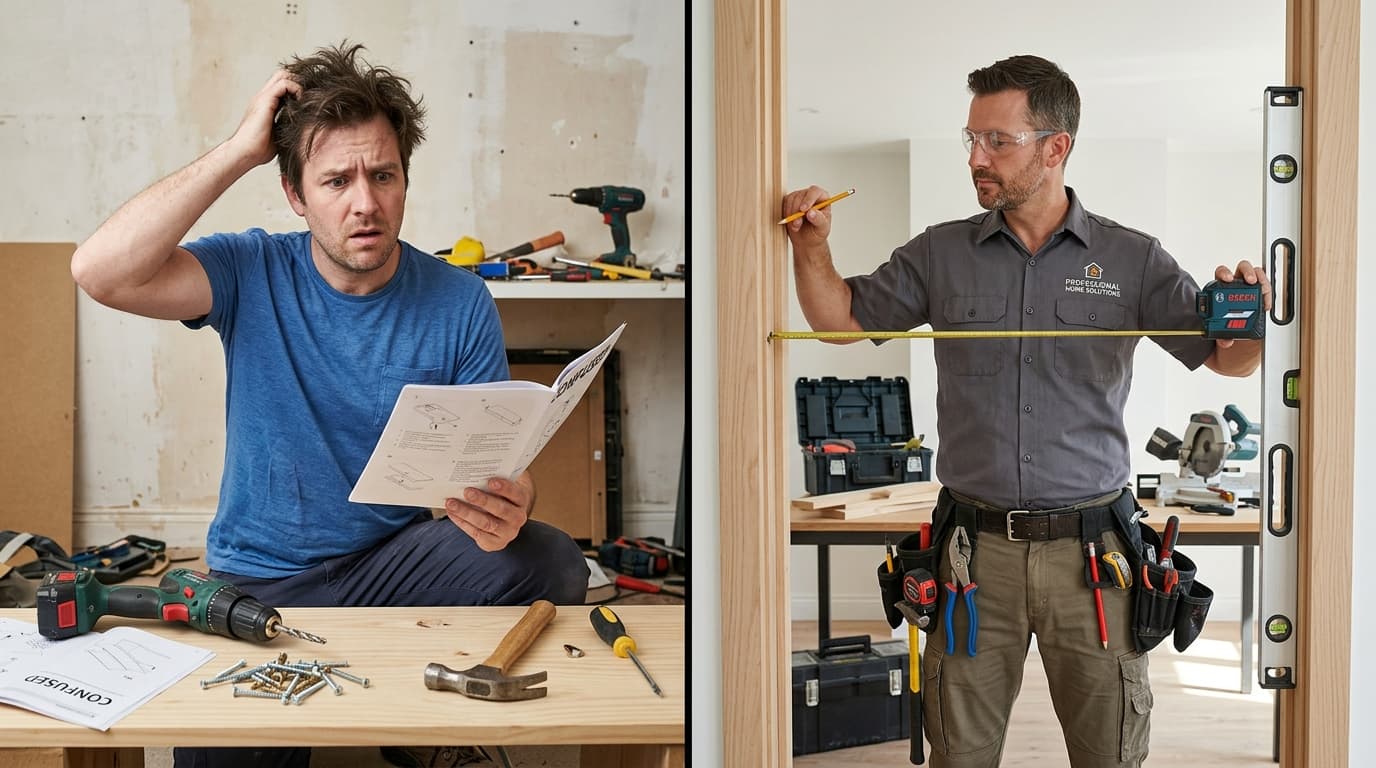
YouTube makes everything look easy. A 12-minute video of a confident contractor installing a tankless water heater looks like a weekend project. The video doesn't show the gas permit, the venting spec, or the time that same contractor spent in continuing education class learning how not to blow up a house.
DIY can save serious money. DIY can also void your homeowners insurance, your appliance warranty, and (in the case of gas or electrical work) your life. The trick is knowing which projects are which.
The four-question test
Before any DIY project, ask yourself:
-
Does this trade require a license? Electrical, plumbing, gas, and structural work are licensed in most states for a reason. If the law requires a license, DIY isn't just risky — it's often illegal and unpermitted work shows up when you sell.
-
Will my homeowner's insurance cover a DIY failure? Many policies exclude damage caused by unpermitted or unlicensed work. A leak from your own DIY plumbing may be denied, leaving you with the full repair bill.
-
Does the manufacturer's warranty require professional installation? Tankless water heaters, furnaces, EV chargers, and most roofing shingles require licensed installation. DIY = voided warranty.
-
Can I undo this if it goes wrong? Painting a wall is reversible. Replacing a load-bearing wall is not. If you can't undo it, respect the project.
Projects almost always worth doing yourself
These are low-risk, low-skill, and high-reward:
- Interior painting — prep is 80% of the work, but it's all learnable
- Replacing cabinet hardware — a $50 job that transforms a kitchen
- Caulking around tubs and sinks — annual maintenance, not skilled trade
- Replacing a toilet seat, showerhead, or faucet aerator — literally a wrench
- Replacing HVAC filters — see our HVAC checklist
- Replacing outlet and switch covers — cosmetic, 10 minutes per room
- Installing a smart thermostat — if you have a C-wire, this is a 30 minute job
The rule of three: If a task takes longer than three trips to the hardware store, time to call a pro.
Projects almost never worth doing yourself
These are licensed trades, dangerous, or on the wrong side of the warranty line:
- Anything inside the electrical panel — one mistake is fatal
- Gas line work — leaks are explosive; permits are non-negotiable
- Roofing — fall risk, leak risk, warranty void, insurance risk in one package
- Water heater replacement — gas, electrical, and plumbing in one job
- HVAC refrigerant — federal law requires EPA certification to handle refrigerants
- Plumbing rough-in behind walls — a slow leak inside a wall rots your house for years before you see it
- Structural changes — moving walls, modifying joists, anything load-bearing
Projects that look like DIY but usually aren't
These are the sneaky ones. They appear in YouTube DIY tutorials and get homeowners in trouble:
- Replacing a garbage disposal — usually simple, but if your sink flange is corroded or the dishwasher line is wrong, you're calling a plumber anyway
- Installing tile floor — easy to install ugly, hard to install well
- Pressure-washing a deck — too much pressure splinters the wood and voids sealer warranties
- Reframing a door opening — a "small" structural change that requires a header calculation
- Replacing a ceiling fan — if there wasn't one there before, the box may not be rated for the weight
| Feature | Ice Dams | Attic Condensation |
|---|---|---|
| Root Cause | Heat escaping attic melts snow on roof; meltwater refreezes at cold eaves. | Warm, humid house air leaks into attic and condenses on the cold roof deck. |
| Primary Location | Roof edges, eaves, gutters, and exterior wall top plates. | Underside of the roof decking, rafters, and throughout the attic insulation. |
| Key Visual Signs | Thick ridges of ice along the roofline; huge icicles; water pooling on the roof. | Frost or water droplets on roof decking; black mold/mildew; rusted nails; damp insulation. |
| Best Long-Term Fix | Add attic insulation, seal warm air leaks from the living area, and ensure proper eave/soffit ventilation. | Seal air leaks, ensure exhaust fans vent outside (not into attic), and balance attic ventilation. |
The honest math of DIY
A weekend DIYer values their time at $0. A licensed professional values it at $80-150/hour, plus overhead, plus guarantee. The DIY path looks free, but it has hidden costs:
- Tool purchases for one-time use
- Material waste from inexperience
- Redo cost when the result isn't right
- Time risk — your weekend is gone
- Failure risk — what's the worst case if this leaks/falls/starts a fire?
If the worst-case cost of failure is more than 2x the pro's quote, just call the pro.
Need a qualified home improvement contractor?
Compare licensed and insured professionals in your local area, check ratings, and request free quotes.
DIY is a great reward. DIY is a terrible gamble. Know the difference before the first trip to the hardware store.