
Florida is one of the most active residential construction and remodeling markets in the country. From hurricane restoration in Tampa and Fort Myers to luxury condo renovations in Miami and Orlando, billions of dollars flow into local trades every month.
Unfortunately, Florida also leads the nation in contractor abandonment and upfront deposit fraud.
To protect homeowners, the Florida Legislature enacted Florida Statutes § 489.126, known as the Money Received by Contractors Law.
If you are hiring a contractor in Florida, understanding how this statute works is the difference between a smooth renovation and losing your life savings.
The Core Provision: Florida Statutes § 489.126
Unlike California, which caps down payments at $1,000, Florida law allows contractors to accept deposits, but imposes strict statutory triggers the moment an upfront payment exceeds 10%:
"A contractor who receives, as initial payment, money in excess of 10 percent of the contract price for construction, improvement, or repair... must apply for permits necessary to do work within 30 days after the date payment is made, and must start the work within 90 days after the date all permits are issued." — Fla. Stat. § 489.126(2)(a)
The Strict Deadlines Every Florida Homeowner Must Track
If you pay more than 10% upfront on any home improvement or roofing contract in Florida:
- The 30-Day Permit Deadline: The contractor has exactly 30 calendar days from the date payment clears to submit formal permit applications to the local building department.
- The 90-Day Construction Deadline: Once permits are issued, the contractor must physically begin work on your property within 90 calendar days.
- The Written Notice Requirement: If the contractor fails to pull permits or begin work within these windows, the homeowner can issue a formal certified written demand letter. The contractor has 30 days to either refund the money or perform the work.
Failure to comply with these statutory deadlines is not merely a breach of contract: it is classified as statutory criminal fraud.
Criminal Penalties Under Florida Law
When a contractor takes a deposit exceeding 10% in Florida and intentionally abandons the job or misapplies the funds, Florida Statutes § 489.126 prescribes severe criminal penalties:
- Under $1,000: First-degree misdemeanor punishable by up to 1 year in jail.
- $1,000 to $20,000: Third-degree felony punishable by up to 5 years in Florida State Prison and up to a $5,000 fine.
- Over $20,000: Second-degree felony punishable by up to 15 years in prison and a $10,000 fine.
- State of Emergency Enhancement: If the contract occurred in a county under an active post-hurricane State of Emergency, the criminal penalty is automatically enhanced to a First-Degree Felony with mandatory minimum sentencing.
The Real-World Danger: Florida's "Permit Pulling Delay"
Despite these laws, unethical operators in Florida take advantage of backlogs at city building departments. Unlicensed roofers and remodelers routinely collect 40% to 50% upfront, submit incomplete permit paperwork to stall the clock, and disappear with the funds.
Because Florida’s Construction Industry Licensing Board (CILB) operates on backlogged complaint queues, civil recovery can take 18 to 36 months.
Test Your Estimate Before You Pay
Never hand over thousands of dollars without checking Florida's statutory rules.
Use the free Ratedeed Florida Contractor Deposit Calculator to simulate your project estimate and calculate your risk profile in seconds.
Protect Your Home with Ratedeed Milestone Escrow
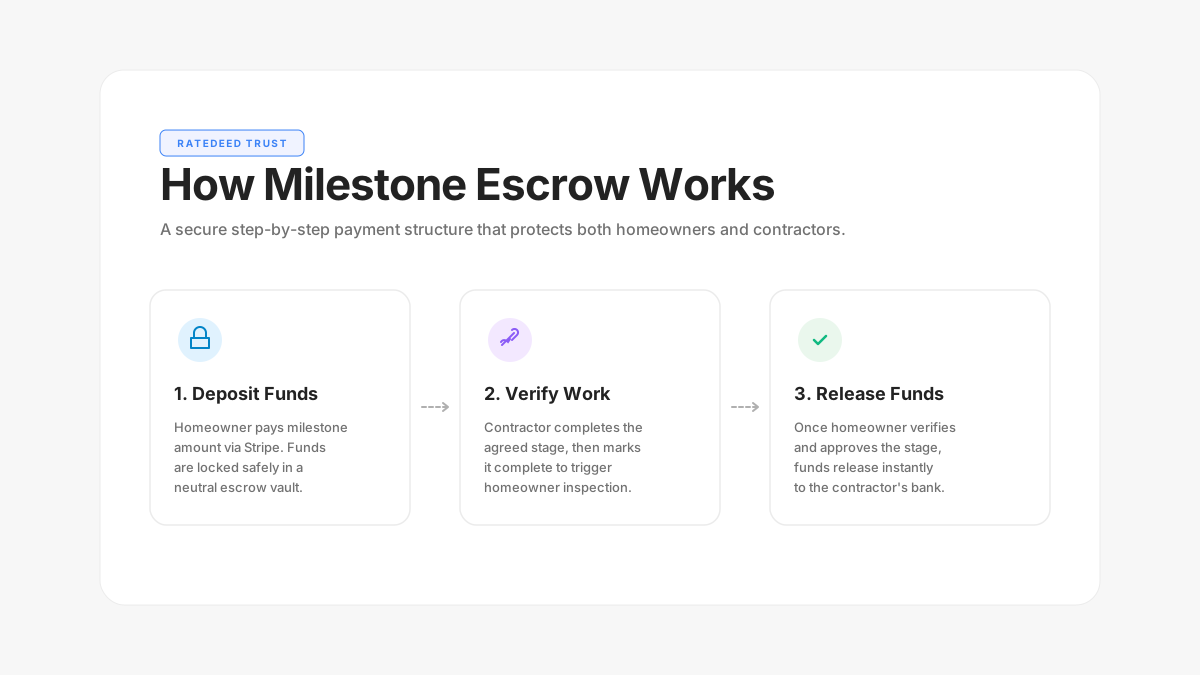
The only foolproof defense against Florida contractor fraud is milestone escrow:
- You deposit funds into a secure escrow account backed by Stripe.
- The contractor sees that 100% of the funds are verified and locked.
- Initial funds are only released when materials are delivered to your driveway and permits are posted on your door.
- Progress payments are released only after passing municipal building inspections.
Avoid upfront payment risks entirely. Find pre-screened, verified Florida contractors on Ratedeed.