
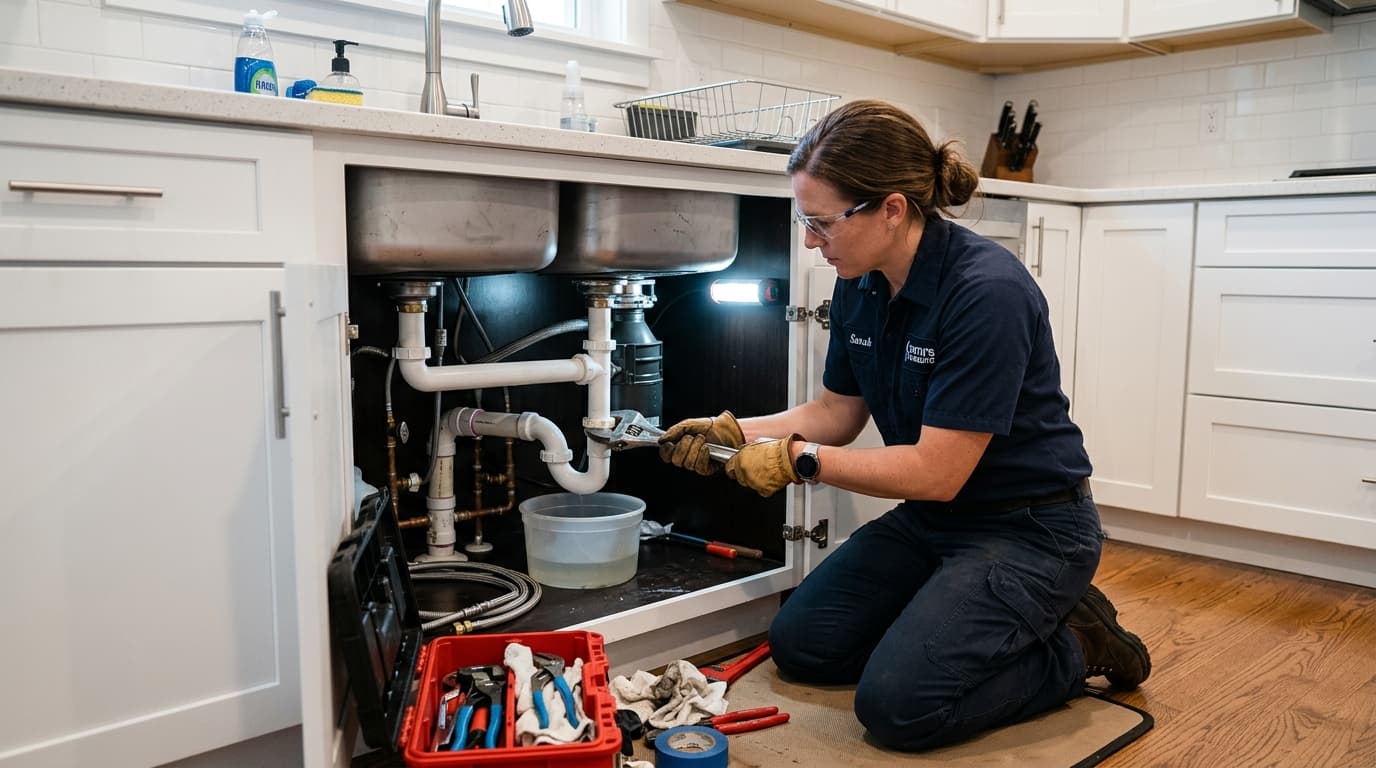
A leaky pipe under the sink might seem like a small job, but a careless plumber can turn a $200 repair into a $5,000 water damage claim. Plumbing touches your home's structure, health, and insurance premiums, so vetting the person you let through your door matters.
Here are seven red flags to watch for, and the green flags that should put you at ease.
1. No license number on the estimate
A licensed plumber should print their license number on every invoice, estimate, and truck decal. If you ask for it and they hesitate, that's a red flag.
Verify before you trust: Look up the license number on your state's contractor licensing board website. A printed number means nothing if it belongs to someone else or expired in 2019.
2. Pressure to pay 100% upfront
It's reasonable for a plumber to ask for a deposit on materials (often 25-50% for big jobs). It is not reasonable for them to demand the full balance before any work begins. Pay-on-completion is the industry standard for service calls. Large upfront deposits are the single biggest scam vector in home improvement — here's why the 40–50% down payment is such a dangerous pattern.
3. "Cash discount" with no paper trail
A plumber who insists on cash and refuses to write a receipt is skipping taxes and, usually, skipping warranty obligations. If something fails next month, you'll have no proof they ever touched it.
4. Vague scope of work
Every estimate should itemize:
- The exact problem being addressed
- Parts to be replaced (with manufacturer and model)
- Labor hours
- Cleanup and disposal
- Warranty terms in writing
If the estimate reads "fix leak - $400" with nothing else, walk away.
5. No insurance certificate on request
General liability and workers' comp are non-negotiable. Ask for a Certificate of Insurance (COI) sent directly from their insurance agent, not a photocopy. A photocopy can be edited.
6. Refuses to pull permits
Most jurisdictions require permits for anything beyond a simple fixture swap. A plumber who says "we don't need a permit, the city doesn't care" is putting that risk on you. If a future inspector or buyer's inspector finds unpermitted work, you pay to redo it.
7. Bad reviews with no response
Don't fear bad reviews — fear plumbers who don't respond to them. A calm, professional reply to a complaint tells you how they'll treat you when something goes wrong.
| Feature | Ice Dams | Attic Condensation |
|---|---|---|
| Root Cause | Heat escaping attic melts snow on roof; meltwater refreezes at cold eaves. | Warm, humid house air leaks into attic and condenses on the cold roof deck. |
| Primary Location | Roof edges, eaves, gutters, and exterior wall top plates. | Underside of the roof decking, rafters, and throughout the attic insulation. |
| Key Visual Signs | Thick ridges of ice along the roofline; huge icicles; water pooling on the roof. | Frost or water droplets on roof decking; black mold/mildew; rusted nails; damp insulation. |
| Best Long-Term Fix | Add attic insulation, seal warm air leaks from the living area, and ensure proper eave/soffit ventilation. | Seal air leaks, ensure exhaust fans vent outside (not into attic), and balance attic ventilation. |
Green flags worth paying a premium for
- Upfront, written estimate delivered before work starts
- Itemized parts list with model numbers
- Warranty in writing (typically 1 year on labor, longer on fixtures)
- Uniform and lettered vehicle — they're not doing this out of a sedan
- Answering the phone as a business name, not "hello?"
Need a qualified plumbing contractor?
Compare licensed and insured professionals in your local area, check ratings, and request free quotes.
Vetting a plumber takes 20 minutes. Replacing a flooded basement takes weeks. Do the 20 minutes — or start with licensed plumbers in Austin or Chicago who've already been vetted on Ratedeed.