
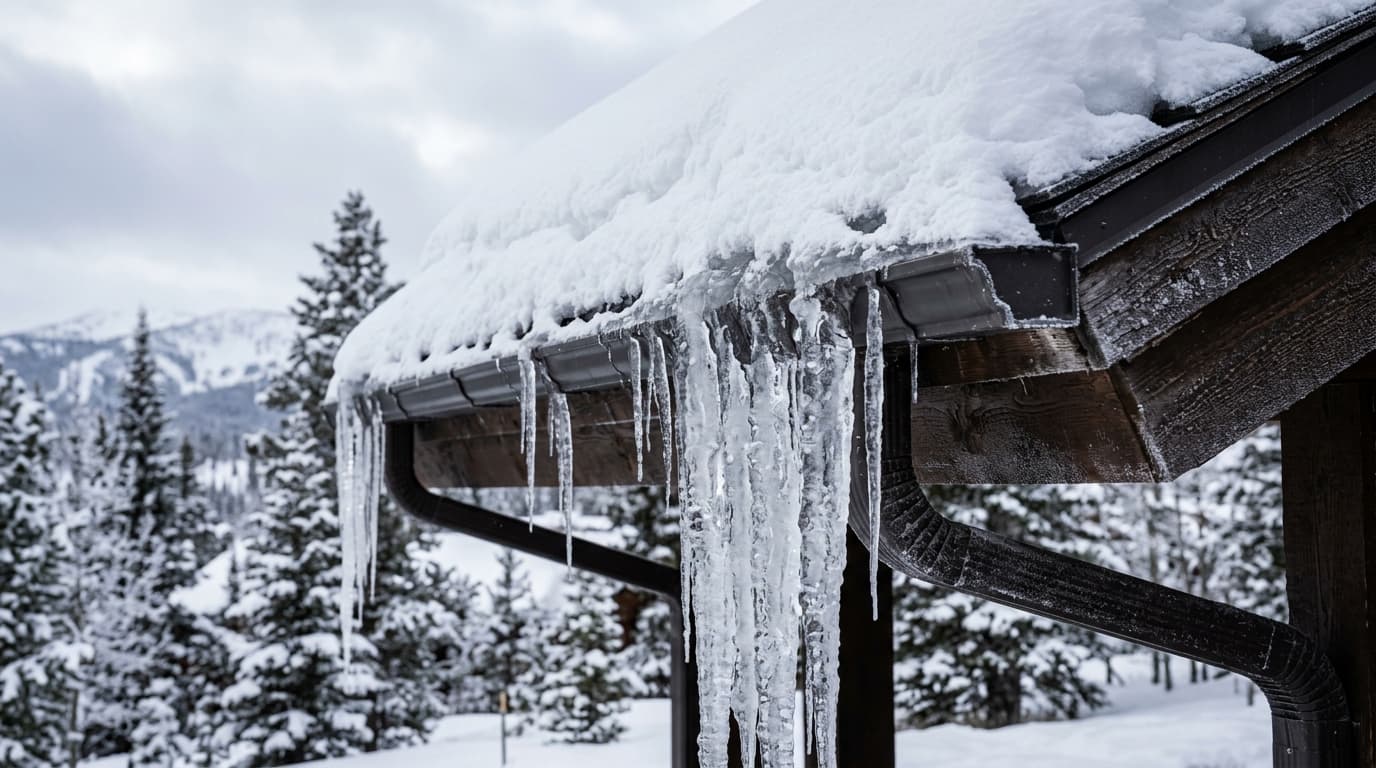
When cold weather hits, homeowners often start noticing water stains on ceilings, damp spots in the attic, or ice hanging from the gutters. These symptoms usually point to one of two common winter issues: ice dams or condensation from internal attic moisture.
While both issues cause wood rot, mold, and ceiling leaks, their root causes and solutions are very different. Let's break down how to diagnose and address each.
What is an Ice Dam?
An ice dam is a ridge of ice that forms at the edge of a roof and prevents melting snow from draining. The water that backs up behind the dam can leak into the home, causing damage to walls, ceilings, and insulation.
How it forms:
- Heat leaks from the house into the attic, warming the roof deck.
- Snow melts on the upper warm section of the roof.
- The meltwater flows down to the cold roof edge/eave (which is not over heated space) and refreezes.
Spotting ice dams: Look for heavy icicles forming directly on the roof edge or gutters, especially if accompanied by water pooling behind them.
What is Attic Moisture/Condensation?
Attic condensation occurs when warm, moist air from the living space escapes into the cold attic. When this moisture meets the cold underside of the roof deck, it condenses into water droplets or frost, which later melts and looks like a roof leak.
Comparing the Two Issues
| Feature | Ice Dams | Attic Condensation |
|---|---|---|
| Root Cause | Heat escaping attic melts snow on roof; meltwater refreezes at cold eaves. | Warm, humid house air leaks into attic and condenses on the cold roof deck. |
| Primary Location | Roof edges, eaves, gutters, and exterior wall top plates. | Underside of the roof decking, rafters, and throughout the attic insulation. |
| Key Visual Signs | Thick ridges of ice along the roofline; huge icicles; water pooling on the roof. | Frost or water droplets on roof decking; black mold/mildew; rusted nails; damp insulation. |
| Best Long-Term Fix | Add attic insulation, seal warm air leaks from the living area, and ensure proper eave/soffit ventilation. | Seal air leaks, ensure exhaust fans vent outside (not into attic), and balance attic ventilation. |
How to Fix Ice Dams
- Seal Bypass Air Leaks: Prevent warm house air from entering the attic by sealing gaps around light fixtures, chimneys, and access hatches.
- Increase Insulation: Ensure you have adequate attic insulation (measured in R-value) to keep heat inside your living space.
- Ensure Proper Ventilation: Ensure ridge vents, soffit vents, and gable vents are clear so cold outdoor air can keep the roof deck cold.
Need a qualified plumbing contractor?
Compare licensed and insured professionals in your local area, check ratings, and request free quotes.
How to Fix Attic Moisture
- Control Indoor Humidity: Run bathroom and kitchen exhaust fans (vented directly outdoors, never into the attic) and consider using a dehumidifier.
- Seal Air Leaks: Just like with ice dams, sealing gaps is critical to stop moisture-laden air from reaching the attic.
- Improve Ventilation: Balanced intake and exhaust vents will carry away any moisture that does find its way into the attic.
If you suspect you have attic issues, it's best to consult a professional home inspector or insulation contractor to assess your ventilation and thermal boundaries.