
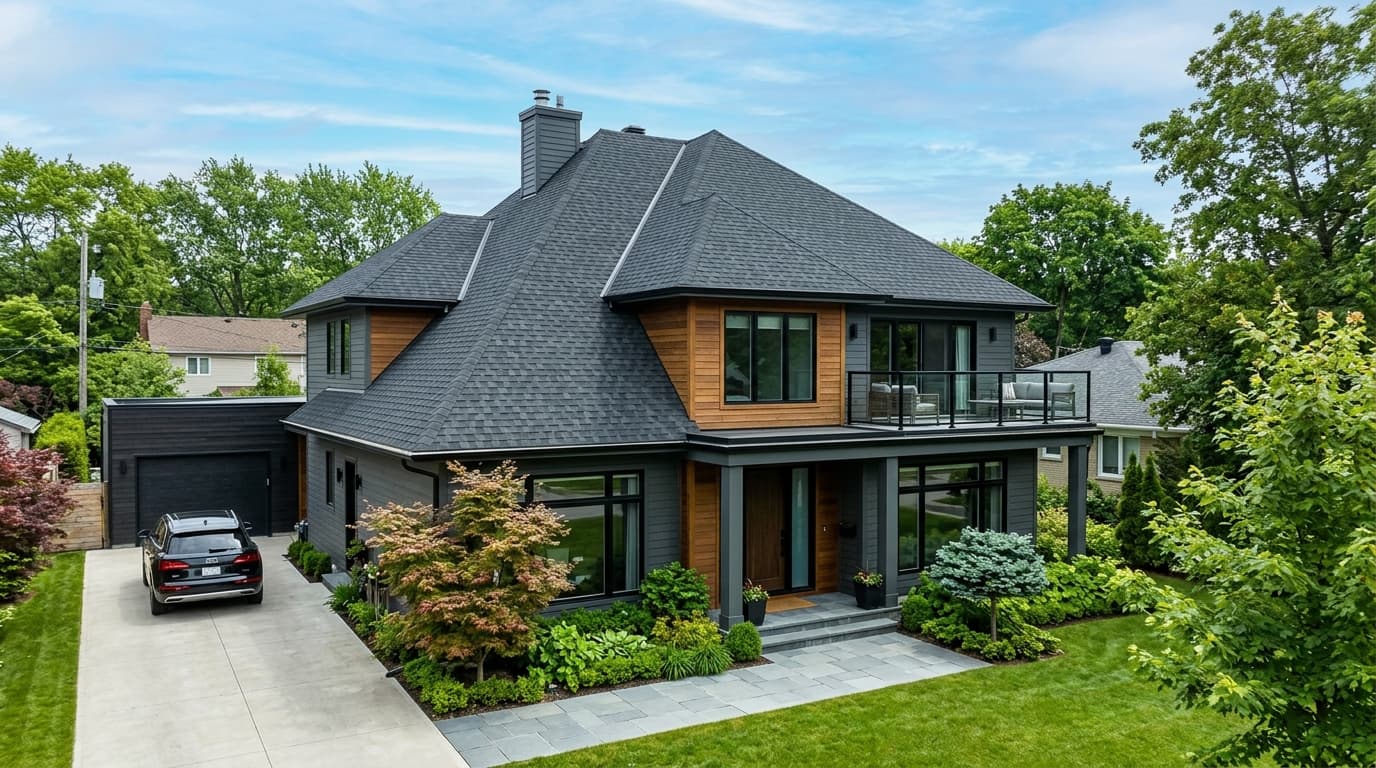
A new roof is the largest singlehome improvement expense most homeowners will face. "How much?" is the first question, and "it depends" is the honest but useless answer. This is the useful version.
The short version
A standard architectural asphalt shingle roof on a 2,000 sq ft single-story home ranges from $7,500 to $14,000 installed in 2026. The same home with metal runs $14,000-25,000. Concrete tile or slate runs north of $30,000.
Let's dissect where that money goes.
Roofing measurement: the "square"
Roofers price jobs in squares, not square feet. One square = 100 sq ft of roof area (not floor area). Roof area is always bigger than footprint because of slope and overhangs. A 2,000 sq ft single-story home typically has 22-30 squares of roof.
Material costs per square installed
| Material | Per square (labor + material) | Expected lifespan |
|---|---|---|
| 3-tab asphalt (basic) | $350-500 | 15-20 years |
| Architectural asphalt | $450-700 | 30-50 years |
| Designer / luxury asphalt | $700-1,200 | 30-50 years |
| Standing seam metal | $1,000-1,500 | 50-70 years |
| Stone-coated steel | $900-1,400 | 40-60 years |
| Synthetic tile (DaVinci,Brava) | $1,200-1,800 | 40-50 years |
| Concrete tile | $900-1,400 | 50+ years |
| Clay tile | $1,200-2,000 | 100+ years |
| Slate | $2,000-3,500 | 75-200 years |
What's included in a real bid
A reputable roofer's bid should itemize these line items:
- Tear-off and disposal — $1-3 per sq ft. Multiple layers cost more to remove.
- Underlayment — synthetic is now standard; ice & water shield required in cold climates.
- Drip edge and flashing — often "extra" on cheap bids. Penetrations (skylights, chimneys) cost more.
- Ventilation upgrade — ridge vent, soffit vent, or power vent. Critical for shingle lifespan.
- New decking — if your existing plywood is rotted, this adds $75-150 per sheet.
- Gutter reattach or replacement — sometimes included, often not.
- Permit and dump fees — $200-700 depending on municipality.
- Labor warranty — 2-10 years standard.
Cheap bid red flag: A bid that's 30-40% lower than the others usually skips line items you'll pay for later as "extras." Compare the line items, not just the totals.
Regional differences that actually matter
- Southern markets (TX, FL, AZ) — concrete tile is common, permit hurdles higher, hurricane strapping required
- Mountain/snow regions — ice & water shield required at eaves, gutters expensive because of snow guard, steeper pitches cost more
- Coastal — wind-rated shingles only, tape seam flashing, stainless fasteners
- Pacific Northwest — heavy moss pressure, treatment and zinc strips add $400-800
Five things that will add to the base cost
- Steepness: Above 8/12 pitch, labor doubles. Walkability affects price more than sq ft.
- Multiple layers: Tearing off two layers costs more than one.
- Skylights and chimneys: Each flashing detail adds $300-600.
- Vaulted / cathedral ceilings: Difficult ventilation details, more labor.
- Story height: Two-story access from the roof side adds scaffolding.
Where to save, where to splurge
Save on:
- Designer shingles unless you're in an HOA that requires them
- Solar-integrated shingles (still 2-3x the cost of separate panels)
- New gutters if yours are fine — they can be reinstalled
Splurge on:
- Upgraded underlayment in cold climates — ice dams ruin ceilings
- Proper ventilation — doubles shingle life
- Flashing detail quality — the leak you'll get in 5 years is at a flashing, not a shingle
Need a qualified roofing contractor?
Compare licensed and insured professionals in your local area, check ratings, and request free quotes.
How to actually get a real number for your roof
Online "roof cost calculators" can be off by 30-50%. The roof's pitch, complexity, layers, and your region all matter — and a website can't see any of them.
The only real number is the one a licensed local roofer gives you after getting on the roof. Get three bids. They'll range 20-40% wide. The middle one is usually right.