
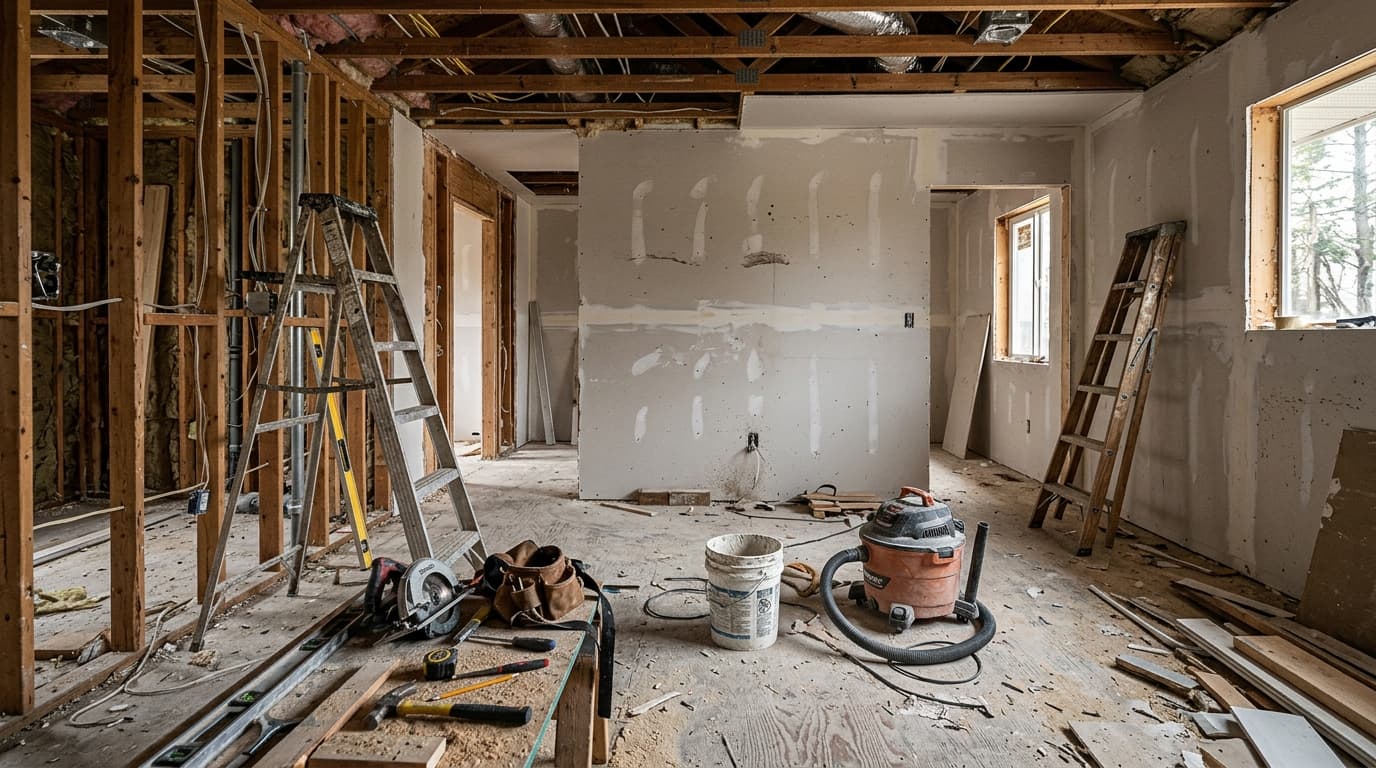
It's the worst-case scenario every homeowner pictures: the contractor stops showing up. The job is half done. They're not returning calls. The dumpster is still in your driveway and your kitchen is missing a wall.
If you paid cash directly, you're in a bad spot. You'll spend weeks in small claims court, pay a new contractor a premium to fix the abandoned work, and probably never recover the original money.
If you paid through Ratedeed, the situation is different. Here's the exact playbook.
First, the structural protection
When you pay through Ratedeed, your money is in escrow, not in the contractor's bank account. Until the milestone is verified complete, the contractor cannot withdraw those funds. That single fact changes everything about how an abandoned-job scenario plays out.
The principle: no completed work, no released funds. The contractor abandoning the job is abandoning their access to the escrow — not the other way around.
Step 1: Document the abandonment
Before raising a dispute, gather evidence:
- Photos of the current state of the work
- Texts/chat logs showing the contractor stopped responding (Ratedeed chat is the best evidence because it's timestamped and visible to the resolution team)
- Construction timeline showing what was supposed to be done by when (from the original quote and milestones)
- Any materials delivered and their condition
Evidence wins disputes. Resolution teams make decisions based on documentation. "He didn't finish" with no photos loses to "He didn't finish, here are eight timestamped photos and our chat log showing no response since Oct 3."
Step 2: Open a dispute on the job
In the Ratedeed jobs dashboard, the job has a "Raise Dispute" action. You'll select:
- The job (and the specific milestone if it's milestone-based)
- The reason ("Contractor abandoned / stopped responding" is a preset option)
- A description of what happened
- Uploaded evidence (photos, documents)
Once submitted, the job status moves to disputed. Funds are frozen. The contractor cannot withdraw, and you cannot reverse — both sides are locked until resolution.
Step 3: The contractor gets a chance to respond
The contractor is notified of the dispute and given a window (typically 48-72 hours) to respond. This is intentional — sometimes "abandonment" is actually a hospitalized contractor or a miscommunication, and they show up to finish the work.
If the contractor responds and commits to completing the work, the dispute can be paused (status "resume") with the funds still frozen. The contractor finishes, you approve, and funds release.
If the contractor doesn't respond, or responds but doesn't actually finish the work, the dispute moves to resolution.
Step 4: Ratedeed's resolution team reviews
A human reviews the case (we don't auto-decide). They look at:
- The original quote and milestones
- The chat history on the platform
- Both parties' submitted statements
- Photo and document evidence
- The contractor's history (repeat abandonment pattern matters)
- The homeowner's history (genuine abandoned job vs. buyer's-remorse pattern)
The team has four resolution actions available, but in an abandonment case, it usually comes down to two:
| Resolution | What happens |
|---|---|
| refund_all | Job abandoned, work not usable. Full refund to homeowner. |
| split | Some milestone-worthy work was completed. Partial refund. |
In genuine abandonment cases, most disputes resolve as partial refunds to the homeowner. The work that was verifiably completed gets paid out; the rest returns to you.
Step 5: You receive the refund
Refunds are processed back to the original payment method (the card or ACH you used to fund the escrow). Stripe refunds typically appear in 3-10 business days depending on your bank.
What if the dispute is abuse?
The dispute system is symmetric — contractors can also dispute if a homeowner ghosts on approval or refuses reasonable milestone sign-off. The same human review applies. Bad-faith disputes from either side leave a pattern in the account history, and that pattern eventually leads to account suspension.
Don't game the dispute system. Homeowners who repeatedly dispute completed milestones to avoid paying get flagged. Contractors who repeatedly abandon jobs get delisted. The pattern is the signal.
The honest comparison
| Feature | Ice Dams | Attic Condensation |
|---|---|---|
| Root Cause | Heat escaping attic melts snow on roof; meltwater refreezes at cold eaves. | Warm, humid house air leaks into attic and condenses on the cold roof deck. |
| Primary Location | Roof edges, eaves, gutters, and exterior wall top plates. | Underside of the roof decking, rafters, and throughout the attic insulation. |
| Key Visual Signs | Thick ridges of ice along the roofline; huge icicles; water pooling on the roof. | Frost or water droplets on roof decking; black mold/mildew; rusted nails; damp insulation. |
| Best Long-Term Fix | Add attic insulation, seal warm air leaks from the living area, and ensure proper eave/soffit ventilation. | Seal air leaks, ensure exhaust fans vent outside (not into attic), and balance attic ventilation. |
| Payment method | If contractor abandons |
|---|---|
| Cash direct to contractor | Lost. Small claims court. |
| Check direct to contractor | Lost. Stop-payment sometimes works. |
| Credit card direct to contractor | Chargeback possible, often denied for "services not fully rendered" |
| Ratedeed escrow | Dispute filed, funds frozen, refund issued. |
That last row is the entire reason Ratedeed exists. The dispute path isn't a feature — it's the product.
What to do right now if your contractor has gone quiet
- Try to reach them once on Ratedeed chat (creates a timestamped record)
- Wait 24 hours
- If no response, gather photos
- Raise a dispute on the job
- Let the resolution process handle it
You don't have to chase, threaten, or hire a lawyer. You just have to tap "Raise Dispute" and let the system do its job.
Need a qualified home improvement contractor?
Compare licensed and insured professionals in your local area, check ratings, and request free quotes.
Contractor abandonment shouldn't cost you thousands. With Ratedeed escrow, it doesn't.