
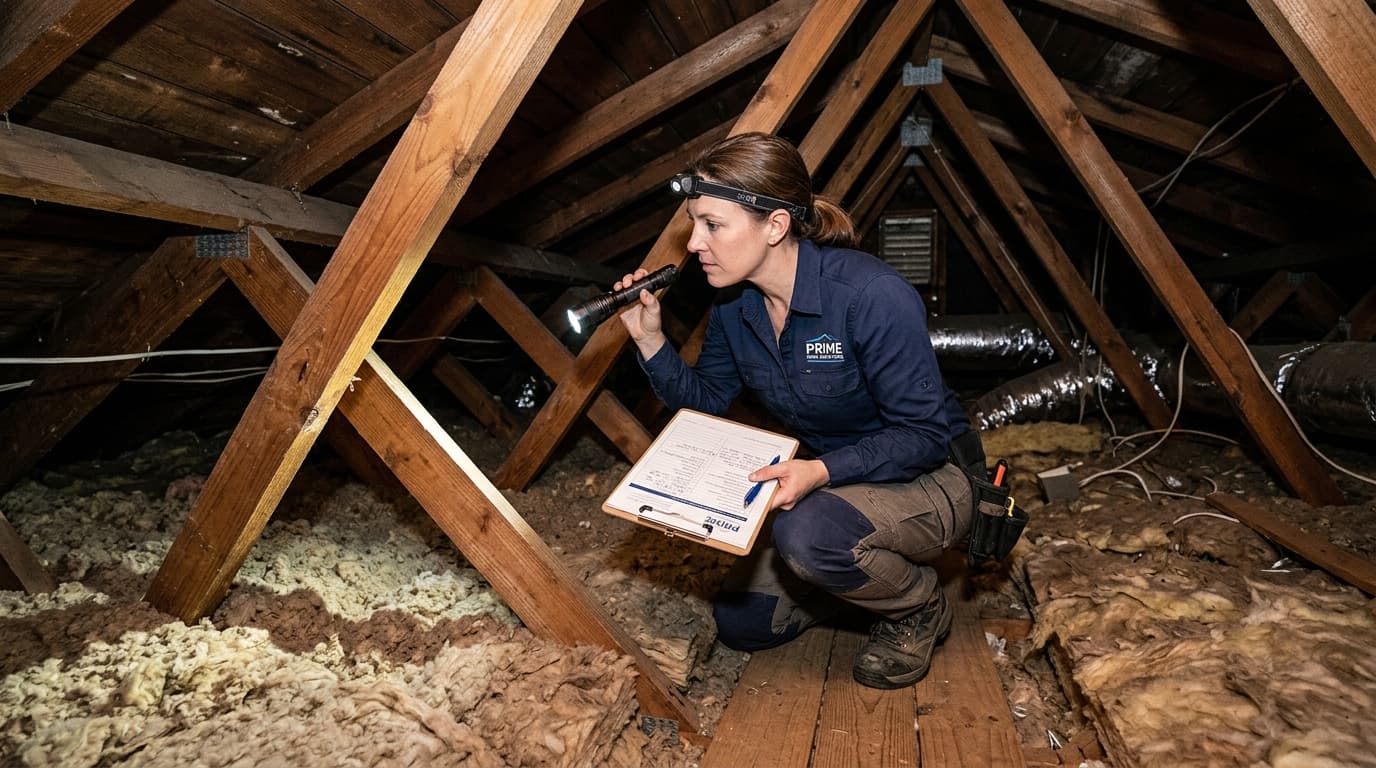
The home inspection is the most underused $400-600 in the entire home buying process. Many buyers treat it as a formality to check on the way to closing. It's actually the single best opportunity tofind out if you're buying someone else's $30,000 problem — and to renegotiate, walk away, or budget accordingly.
Here's what actually happens, what's covered, what isn't, and the questions to ask.
The basic format
A typical inspection runs 2-4 hours. The inspector arrives, walks the exterior, then the interior, then crawls under and climbs up. You should be there for the last 30-60 minutes to walk through findings.
You'll receive a written report within 24-48 hours, sometimes the same day, with photos and recommendations. Most reports categorize every finding as:
- Major / Safety — fix before move-in, or get a specialist quote
- Minor / Maintenance — address over time
- Monitor — not failing yet, but watch
What a standard inspection covers
A general home inspector examines visible and accessible conditions in these systems:
Exterior
- Roof (from ladder or with drone — not usually walked)
- Siding, trim, caulk
- Foundation crack scan
- Grading and drainage around the perimeter
- Decks, porches, railings
Interior
- Attic (insulation, ventilation, roof deck underside)
- Crawl space or basement (moisture, structural, vapor barrier)
- Electrical panel and a representative sample of outlets
- Plumbing under sinks, water heater, main shutoff
- HVAC — visual inspection, operation test, age estimate
- Windows and doors (representative sample)
- Stairs, fireplaces, basic built-in appliances
What a standard inspection does NOT cover
This is the part most buyers misunderstand. A general inspection cannot see inside walls, under floors, or behind finished ceilings. Specialized systems need a specialist.
| System | Requires a specialist? |
|---|---|
| Termite / WDO | Yes — licensed pest inspector |
| Sewer line (main) | Yes — sewer scope |
| Radon | Yes — separate test |
| Mold / air quality | Yes — industrial hygienist |
| Lead / asbestos | Yes — lab test |
| Chimney interior | Yes — chimney sweep / CSIA |
| Pool / spa / septic | Yes — respective specialists |
| Geotech / foundation | Yes — structural engineer |
Important: Inspectors do not move furniture, do not remove cover plates, and do not test systems that are unsafe or shut down. If the seller has the gas off and the power off, the inspection is severely limited. Confirm utilities are on before the inspection date.
The questions to ask the inspector on site
These separate a useful inspection from a piece of paper:
- "If this were your house, what would you fix first?" Forces a prioritization instead of a punch list.
- "Is this a normal aging issue or a sign of a bigger problem?" Distinguishes 50-year-old paint from foundation settlement.
- "What would a specialist cost to evaluate this further?" Helps you decide if a $300 sewer scope is worth it (almost always yes).
- "How much life is left in the HVAC, roof, and water heater?" The three biggest single-ticket replacements.
- "What should I budget for in the next 1, 3, and 5 years?" The maintenance cap-ex plan you actually need.
After the report: the three paths
Once you have the report, you have three options:
- Accept the home as-is. Right call on a tight seller's market or for a well-maintained home.
- Request repairs or credits. Be specific. "Fix the roof" is bad. "Replace missing shingles at south slope, provide receipt" is good.
- Walk away during the inspection contingency period. Often the smartest money you never spent.
The two specialist add-ons I always recommend
Regardless of home age, two specialist inspections pay for themselves over and over:
- Sewer scope ($150-300) — a broken main sewer line costs $5,000-15,000 to replace. The camera finds it before you own it.
- Radon test ($25 DIY or $150 pro) — colorless, odorless, the second leading cause of lung cancer. Fix is a $1,200-2,500 mitigation fan if levels are high.
Need a qualified home improvement contractor?
Compare licensed and insured professionals in your local area, check ratings, and request free quotes.
The home inspection is not a hurdle to closing. It's an information asset worth more than the report's cost many times over. Read it, ask questions, and use it as a ten-year maintenance blueprint, not just a pass/fail on the transaction.